10 Places You Shouldn't Miss on Your First Heritage Trip to Ghana
July 27, 2026 · 5 min read
Ask ten people who have traveled to Ghana what they remember most, and you'll probably get ten different answers.
Some will talk about standing inside Cape Coast Castle in complete silence.
Others will tell you about the smell of fresh kelewele on a busy street in Accra, the sound of drums during a cultural performance, or the view from a canopy bridge suspended high above the rainforest.
That's one of the things that makes Ghana special. Every destination has its own story, and together they paint a picture that's far richer than most people expect.
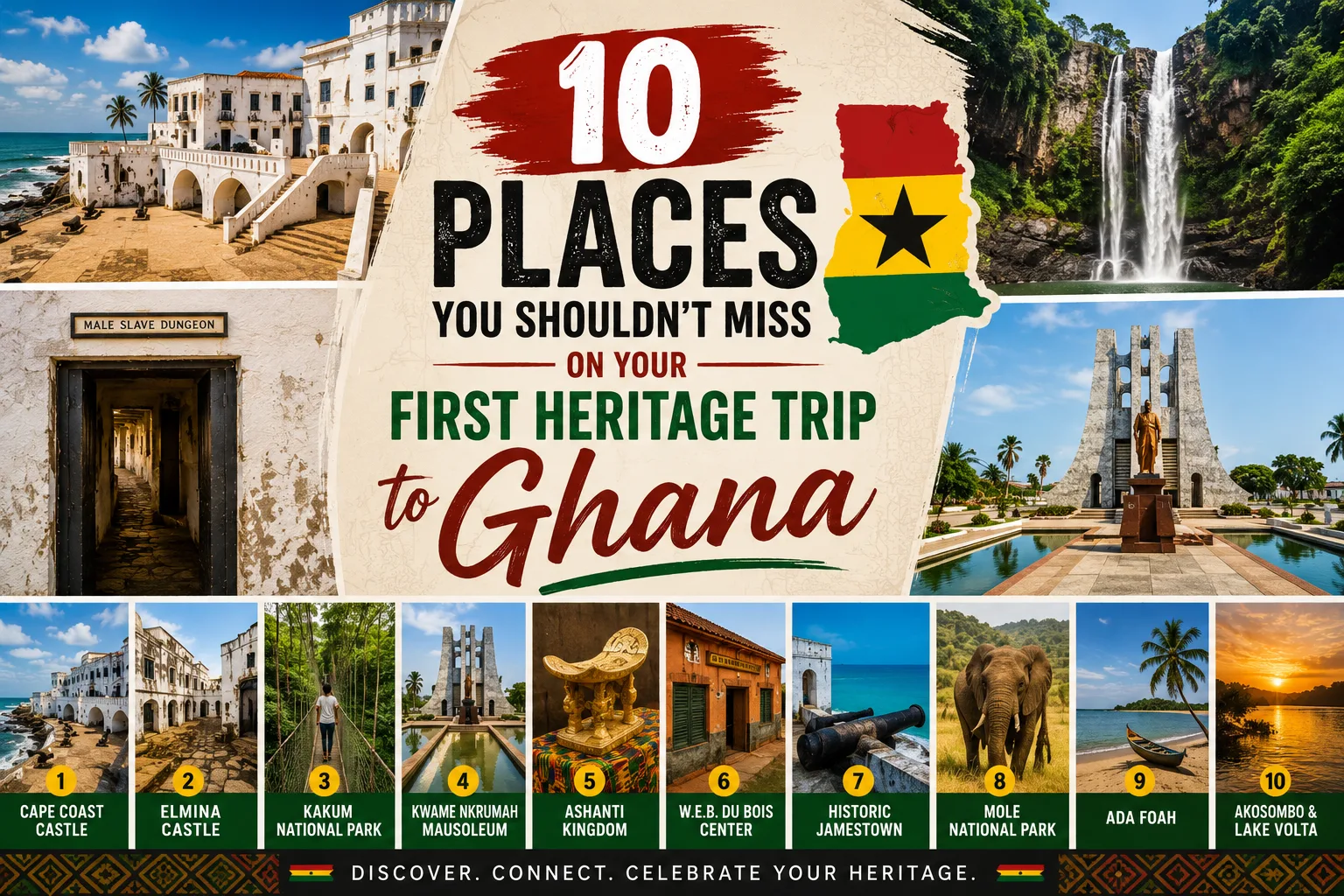
If you're planning your first heritage tour, these are ten places that deserve a spot on your itinerary.
1. Cape Coast Castle
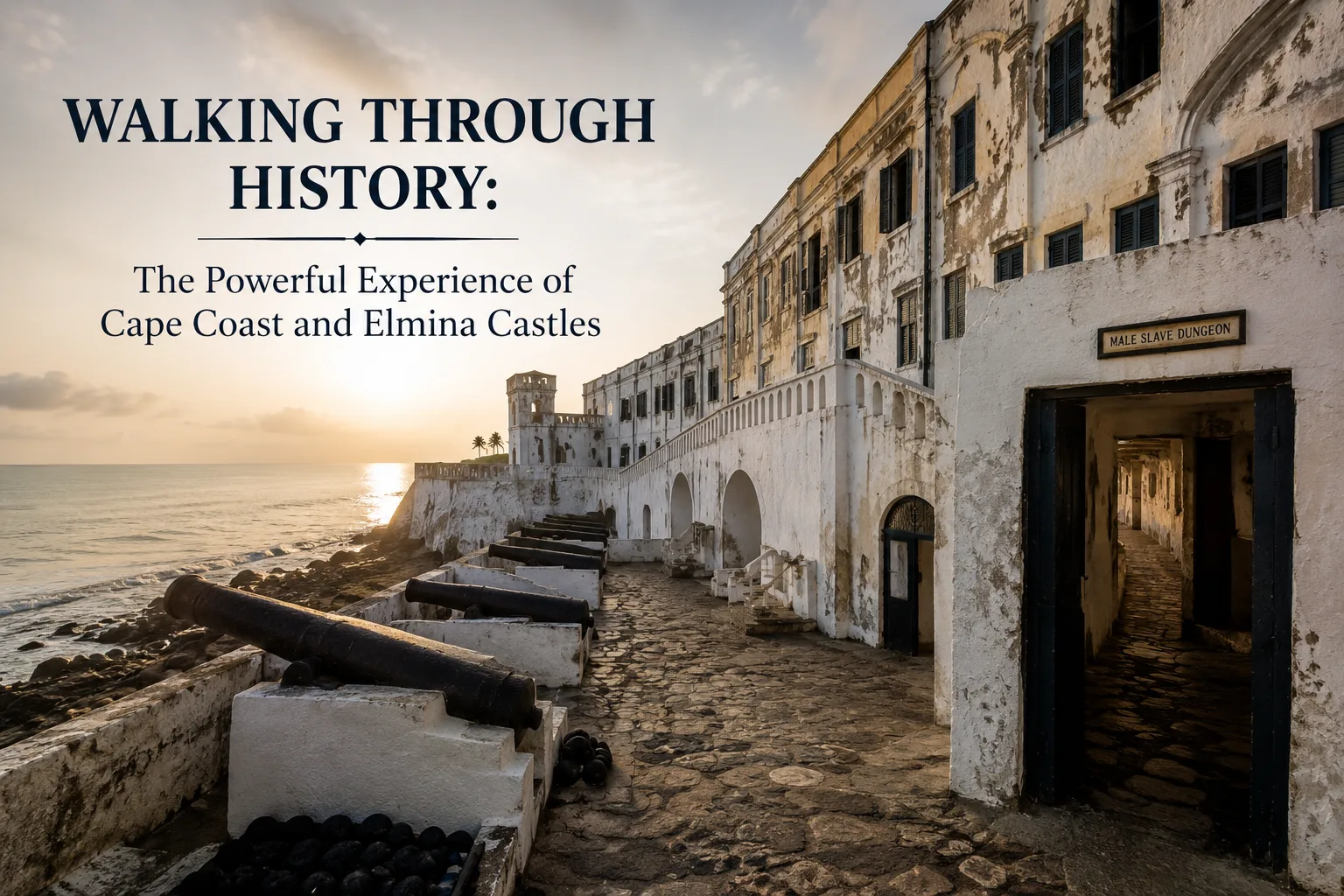
There's no way around it—this is one of the most emotional stops you'll make.
Built in the 1600s, Cape Coast Castle became one of the largest holding sites during the transatlantic slave trade. Walking through the dungeons is a sobering experience. The stone walls, narrow passages, and the infamous “Door of No Return” leave a lasting impression that no history book can fully capture.
Most visitors leave quietly, taking time to reflect before moving on.
2. Elmina Castle
Just a few miles from Cape Coast sits another landmark with an equally important story.
Elmina Castle is the oldest European building south of the Sahara, originally built by the Portuguese in 1482. Like Cape Coast Castle, it later became a major center in the slave trade.
Although the two castles share similar histories, each offers a different perspective. Visiting both helps you better understand the scale and human impact of what took place along Ghana's coast.
3. Assin Manso Ancestral Slave River Park
This stop isn't as well known, but many travelers say it's one of the most meaningful.
Before captives reached the coast, many passed through Assin Manso. It's believed to be one of the last places where enslaved Africans bathed before beginning the final leg of their journey to the castles.
Today, the site is peaceful and beautifully maintained.
Standing beside the river, it's hard not to think about the lives that changed forever here.
4. Kakum National Park
Not every unforgettable moment in Ghana is tied to history.
Kakum National Park offers something completely different.
The park's famous canopy walkway stretches high above the rainforest floor, giving visitors a chance to experience one of West Africa's most beautiful natural landscapes. If you're lucky, you'll spot colorful birds, butterflies, and other wildlife while surrounded by towering tropical trees.
It's the kind of place that reminds you Ghana's beauty extends far beyond its historic landmarks.
5. Kwame Nkrumah Memorial Park
You can't understand modern Ghana without learning about Dr. Kwame Nkrumah.
As Ghana's first president, he led the nation to independence from British rule in 1957, making Ghana the first sub-Saharan African country to gain independence from colonial rule.
The memorial park in Accra includes his mausoleum, museum, and exhibits that tell the story of Ghana's journey toward self-determination.
6. Independence Square
Just a short drive from the memorial is one of Ghana's most recognizable landmarks.
Independence Square is where national celebrations, military parades, and major public events take place. Standing beneath the Black Star Gate, it's easy to appreciate the pride Ghanaians have in their country's independence and identity.
It's also one of the most photographed locations in Accra—and for good reason.
7. The W.E.B. Du Bois Memorial Centre
Many visitors are surprised to learn that the renowned American scholar and civil rights leader W.E.B. Du Bois spent his final years living in Ghana.
His former home has been preserved as a museum and memorial. Walking through it offers a fascinating look at his work, his vision for Pan-African unity, and the relationship he developed with Ghana during the country's early years of independence.
It's a meaningful stop for anyone interested in African American history.
8. Makola Market
If you want to experience everyday life in Accra, spend time at Makola Market.
It's lively, colorful, and wonderfully chaotic.
Vendors sell everything from handcrafted textiles and spices to fresh produce, jewelry, and household goods. It's also a great place to practice your bargaining skills while supporting local businesses.
Come with comfortable shoes—and an open mind.
9. The Arts Centre
Looking for something to take home that actually tells a story?
The Arts Centre in Accra is filled with local artisans creating wood carvings, woven baskets, hand-painted fabrics, beads, sculptures, and traditional clothing.
Many artists are happy to explain the meaning behind their work, making the shopping experience just as memorable as the items themselves.
10. Kumasi and the Ashanti Kingdom
No heritage tour is complete without learning about the Ashanti people.
Kumasi, Ghana's second-largest city, has long been the cultural heart of the Ashanti Kingdom. Here you'll find traditional craftsmanship, vibrant markets, and a rich history of leadership, resilience, and cultural pride.
If your schedule allows, spending time in Kumasi provides a deeper understanding of Ghana's traditions beyond the coastline.
Every Stop Tells a Different Story
The beauty of traveling through Ghana is that no single place defines the experience.
One location helps you understand the pain of the past.
Another celebrates freedom.
Another introduces you to living traditions, incredible food, breathtaking scenery, or conversations you'll remember long after you've returned home.
When you put them all together, you don't just visit Ghana.
You begin to understand it.
And chances are, you'll leave with a list of places you already want to see again.